
Identification of late “G” dye blobs problems
- One or more large “G” channel peaks in the trace regions around base 200 and 400.
- The earlier of the two “G” peaks is normally the largest. In some cases the ~400 base G peak is not visible at all.
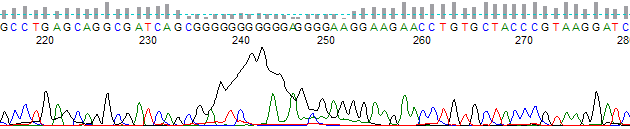
Figure 1. “G” dye blob at 235 – 250 base range.
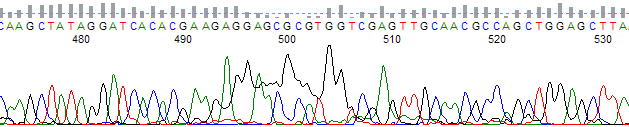
Figure 2. Late “G” dye blob after 400 bases in the same trace as figure 1. Note that this blob is smaller in relation to the trace signal.
Causes of late “G” dye peaks
- Breakdown of the BigDye™ sequencing chemistry before the sequencing reaction is cleaned up (i.e. before the leftover labeled nucleotides are removed).
- Breakdown of the BigDye chemistry caused by excess heating or high numbers of freeze/thaw cycles.
- Letting the resuspended sequencing products sit at room temperature for too long (+12 hours).
- The problem of late G peaks is often only detected if the sample clean up is not performed correctly. In other words, late “G” dye blobs tend to only be observed when the trace contains early dye blobs.
Solving late “G” dye peak problems
- Avoid overheating the DNA sequencing reactions. Try and keep the denaturation temperature in the sequencing thermocycling below 96˚C and under 20 seconds.
- Avoid excessive numbers of freeze/thaw cycles of the BigDye chemistry. It is a good idea is to aliquot out the BigDye stock into small (10 – 20 µl) lots to minimize the number of time the sequencing chemistry is defrosted and refrozen.
- Avoid the letting sample sit at room temperature for excessive times. The most common cause of this is when the sequencer is loaded up with multiple trays to run overnight or run over the weekend.
- Use a different cleanup protocol. If the trace contains early dye blobs then check and modify your sequencing clean-up protocol. You may want to try using the phenol/butanol sequencing clean-up protocol.
Return to the main DNA sequencing troubleshooting page.